Italian Natural Marble
Monet Garden Marble
Nature’s Palette, Captured in Italian Stone
A painter’s eye. A natural palette.
Colour, composed
by nature.
At his home in Giverny, France, Claude Monet created a garden with a painter’s eye. Flowers and foliage grew at different heights, bringing depth and movement to carefully composed colours. As the seasons changed, so did the garden—a living canvas shaped by nature and the artist’s hand.
Monet Garden Marble evokes that same harmony of colour. Sourced from Brescia, Lombardy, Italy, and also known as Breccia Aurora, this natural marble brings together pale green, blush pink, soft lilac and warm yellow, with touches of coffee brown and ochre. Its irregular stone fragments and mineral veining create layered compositions reminiscent of an Impressionist painting.
Explore all 16 slab selections ↗The material in motion
See the stone.
Follow the movement.
A closer look at the slab as it moves through the production line. Cream, soft green and warm earth tones meet in an intricate network of natural veins.
The film offers another view of the material’s character, alongside the individual colour selections above.
01 / Quarry
From the stone
of northern Italy.
The story begins in Brescia, Lombardy. Natural variations in the stone continue from block to block, giving each slab its own balance of colour and movement.
A natural work of art.
A closer look at the material02 / Slab Selection
A Different Composition
in Every Block
Each block has its own balance of colour, making the selection of actual slabs an essential part of every project.
Some blocks reveal a coffee-toned background with rich brown markings, giving the stone an earthy warmth. Others have a yellow ground softened by hints of pink.
Lighter selections blend pale lilac with delicate green. In some, lilac leads; in others, green becomes more prominent. Together, these quiet colours suggest a water garden at dusk, where leaves, blossoms and reflections gently overlap.
Other blocks carry green and occasional purple accents across a warm yellow background. Pale yellow and light green combinations offer a softer, more classical character.
Explore the six photographed selections below. Colour and pattern vary naturally; review the actual slabs for your project.
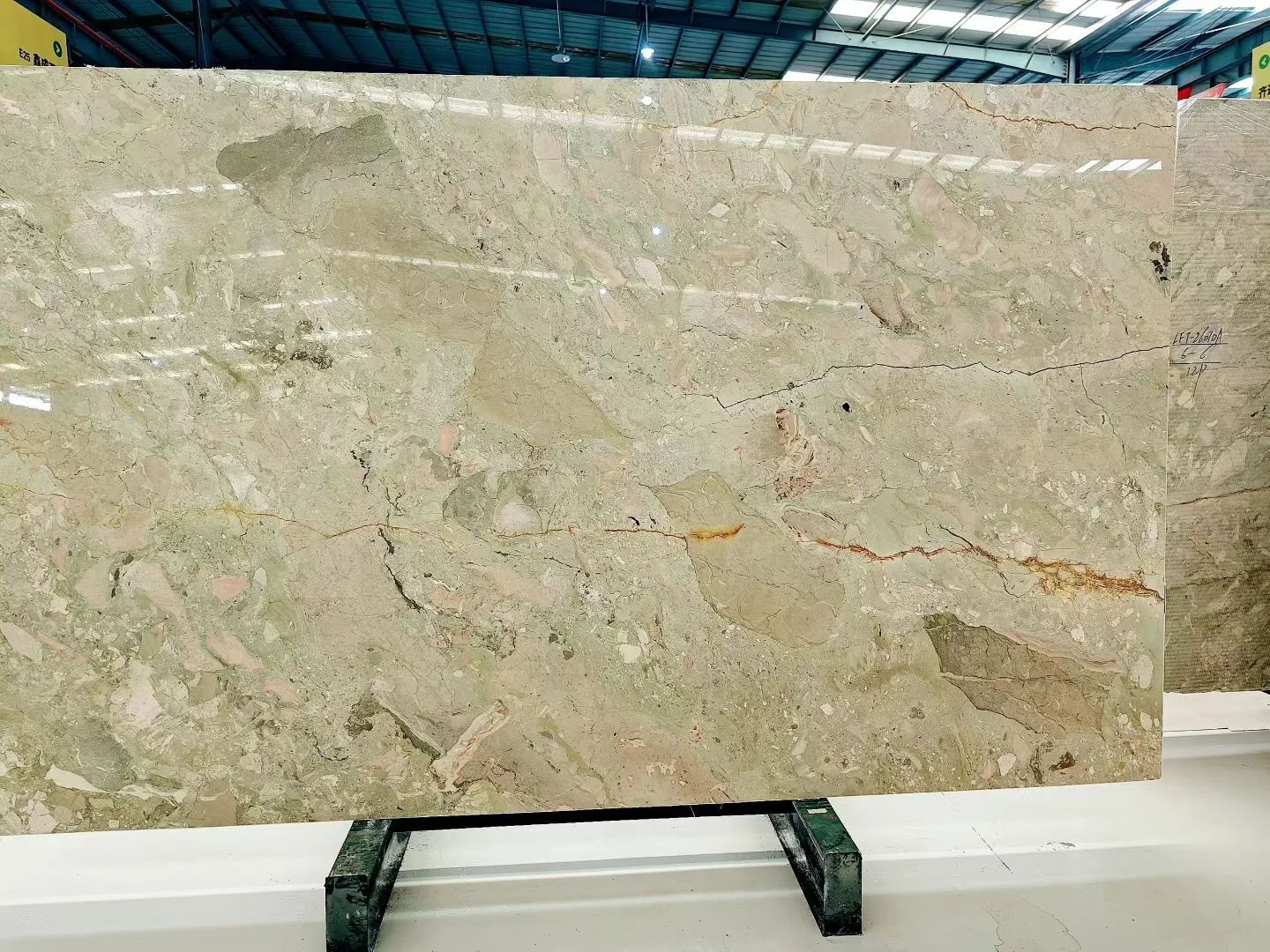
Soft green & cream
Pale green mineral movement surrounds cream and blush fragments.
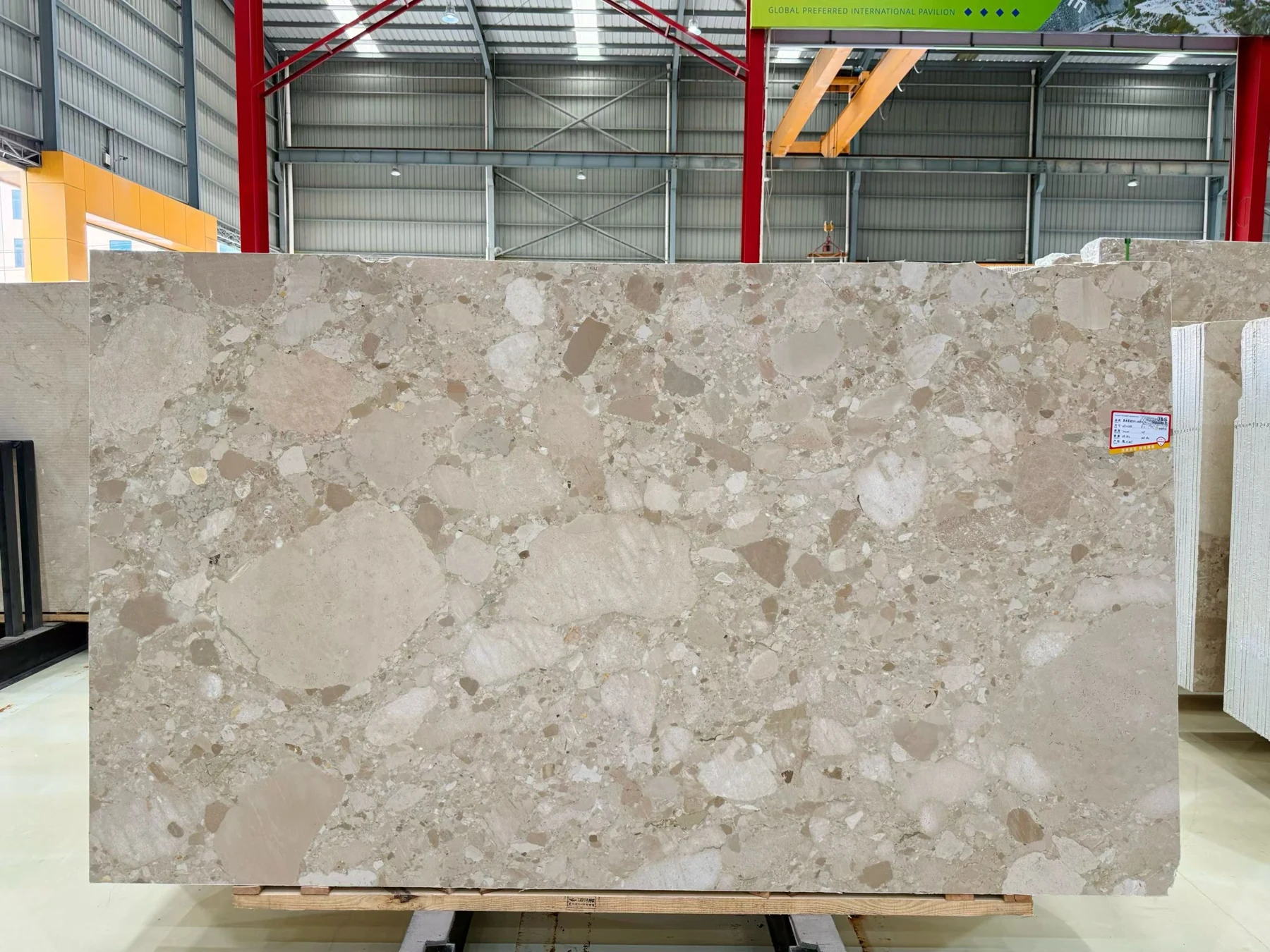
Muted blush & ivory
A quieter palette of soft pink, ivory and grey-beige.
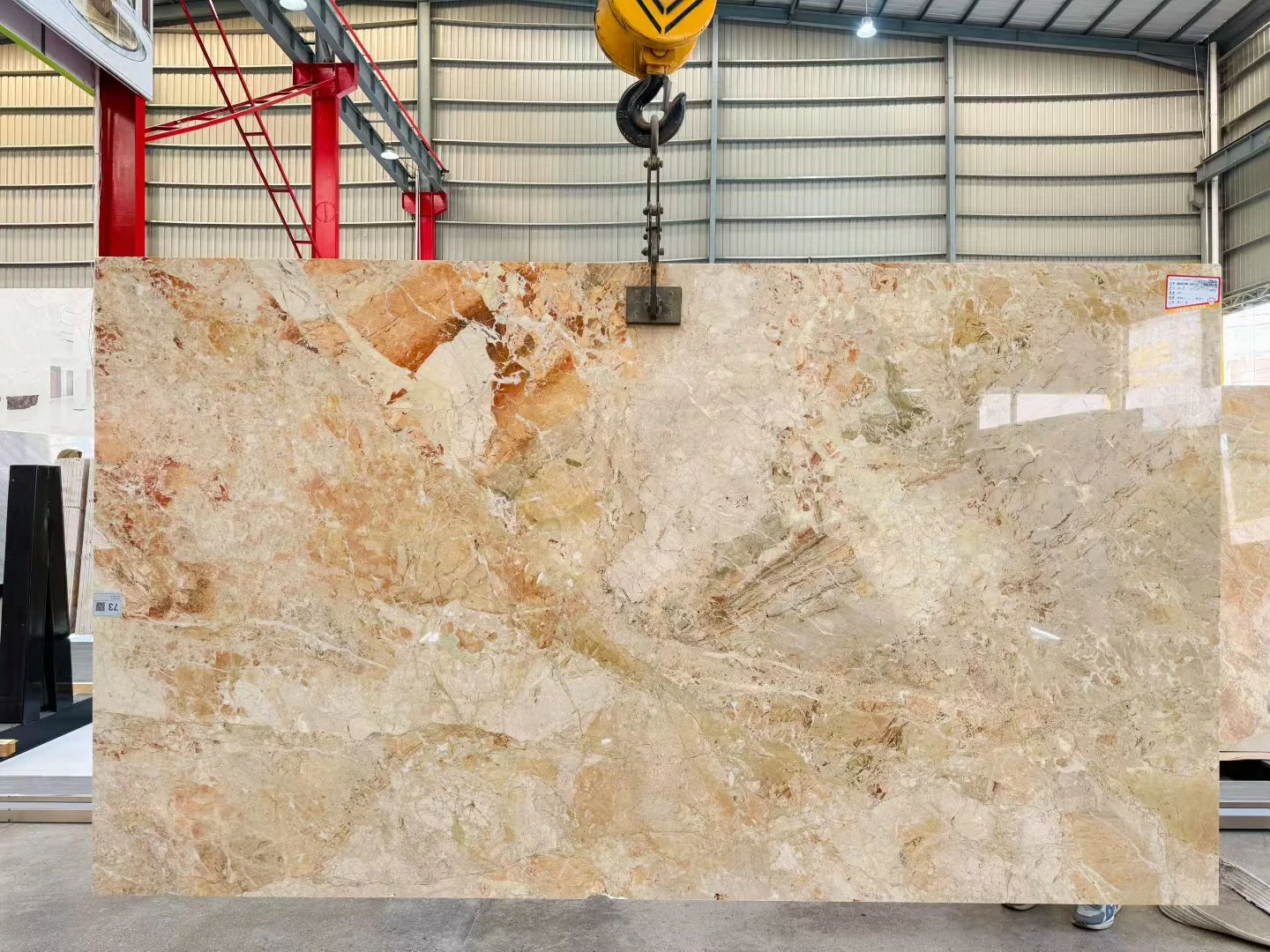
Warm gold & peach
Ochre and peach tones bring warmth to an expressive slab.
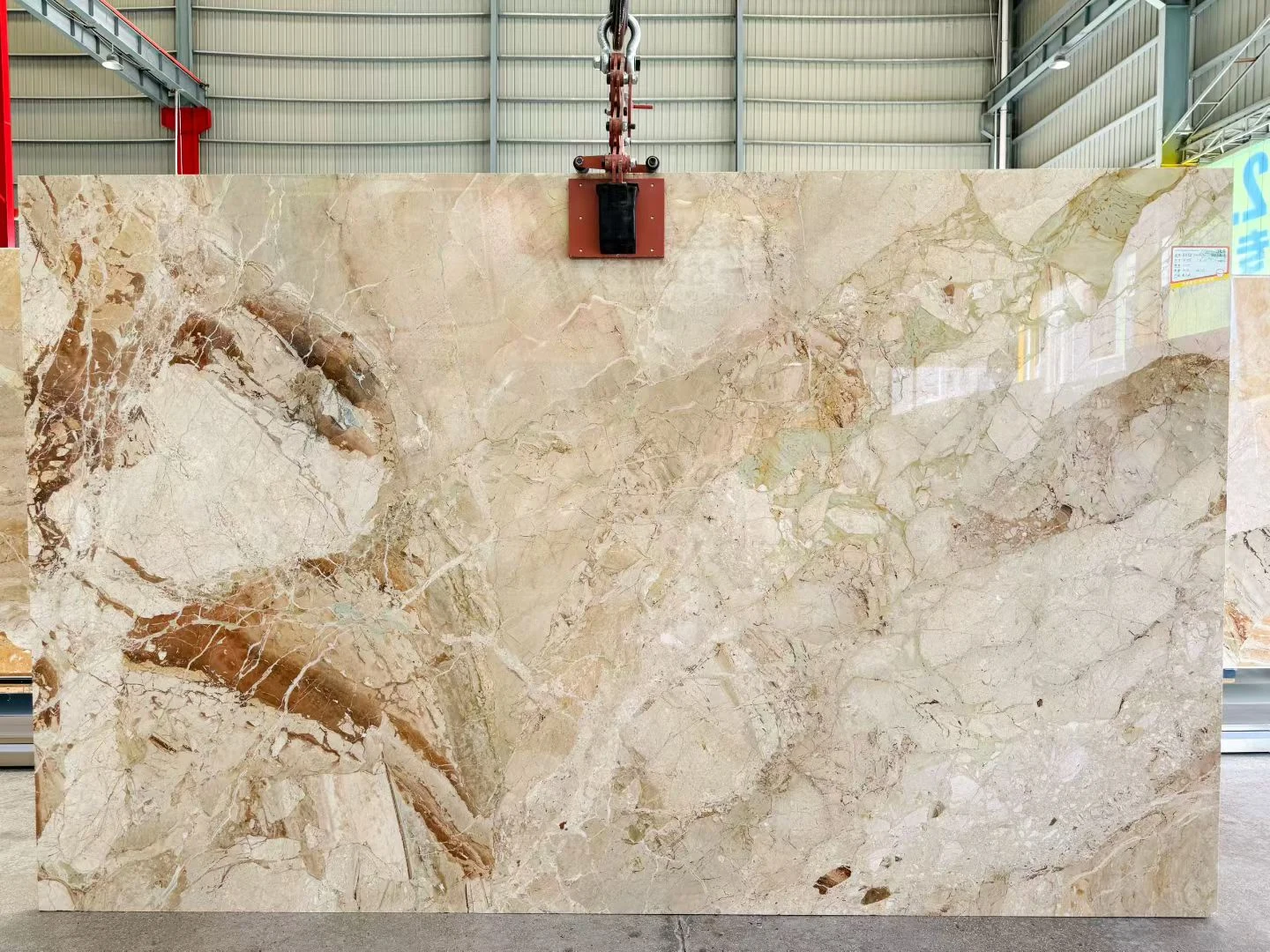
Earthy brown accents
Brown and warm beige markings contrast with lighter stone.
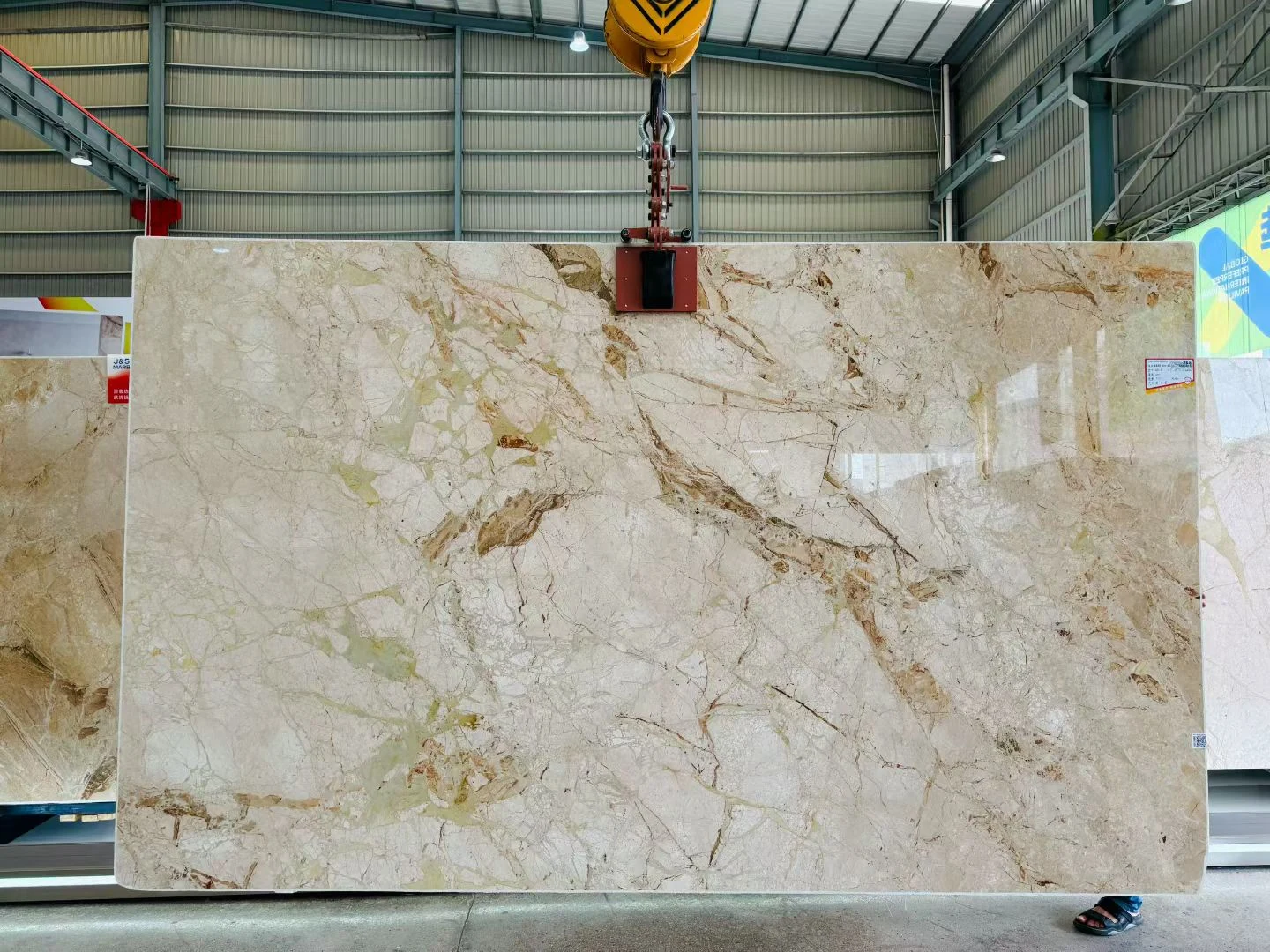
Delicate green veining
Fine green-grey veins cross a light cream background.
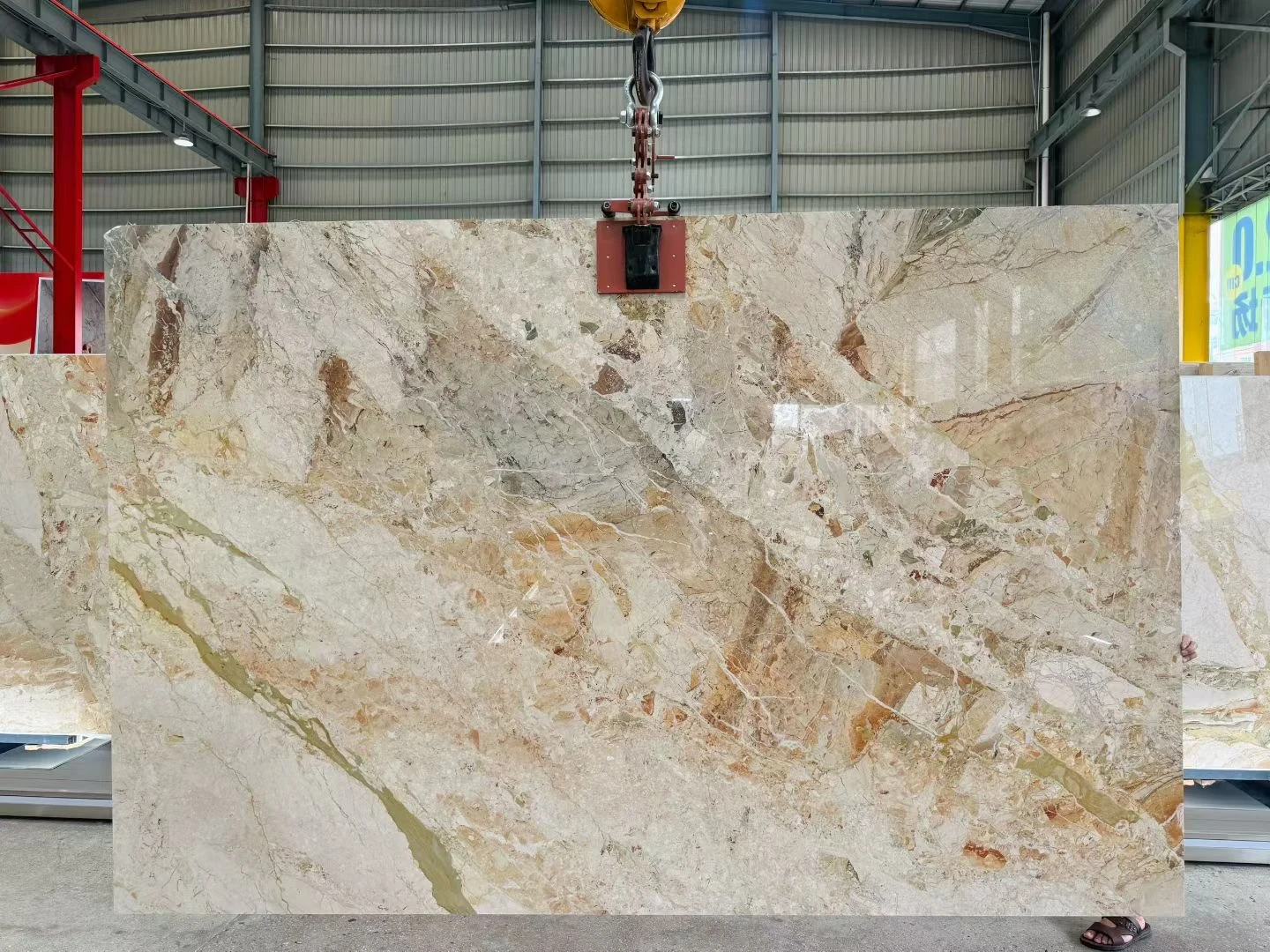
Flowing mineral movement
Long, diagonal movement connects ivory, beige and subtle pink.
03 / Bookmatched Layouts
Two slabs.
One flowing composition.
Paired slabs reveal the relationship between adjoining surfaces. Review the vein alignment and overall colour balance before confirming a layout.
04 / CNC Cutting & Custom Fabrication
From your drawing
to the finished piece.
Custom sizes, cut-outs and profiles begin with a clear drawing. Confirm dimensions, edge details and the direction of the stone pattern before fabrication.
05 / Interior Applications
Natural Colour
for Interior Spaces
As a feature wall, bathroom vanity, tabletop or fireplace surround, Monet Garden Marble gives colour and texture a central role in the room.
Larger surfaces reveal the full composition, while smaller pieces draw attention to individual details.
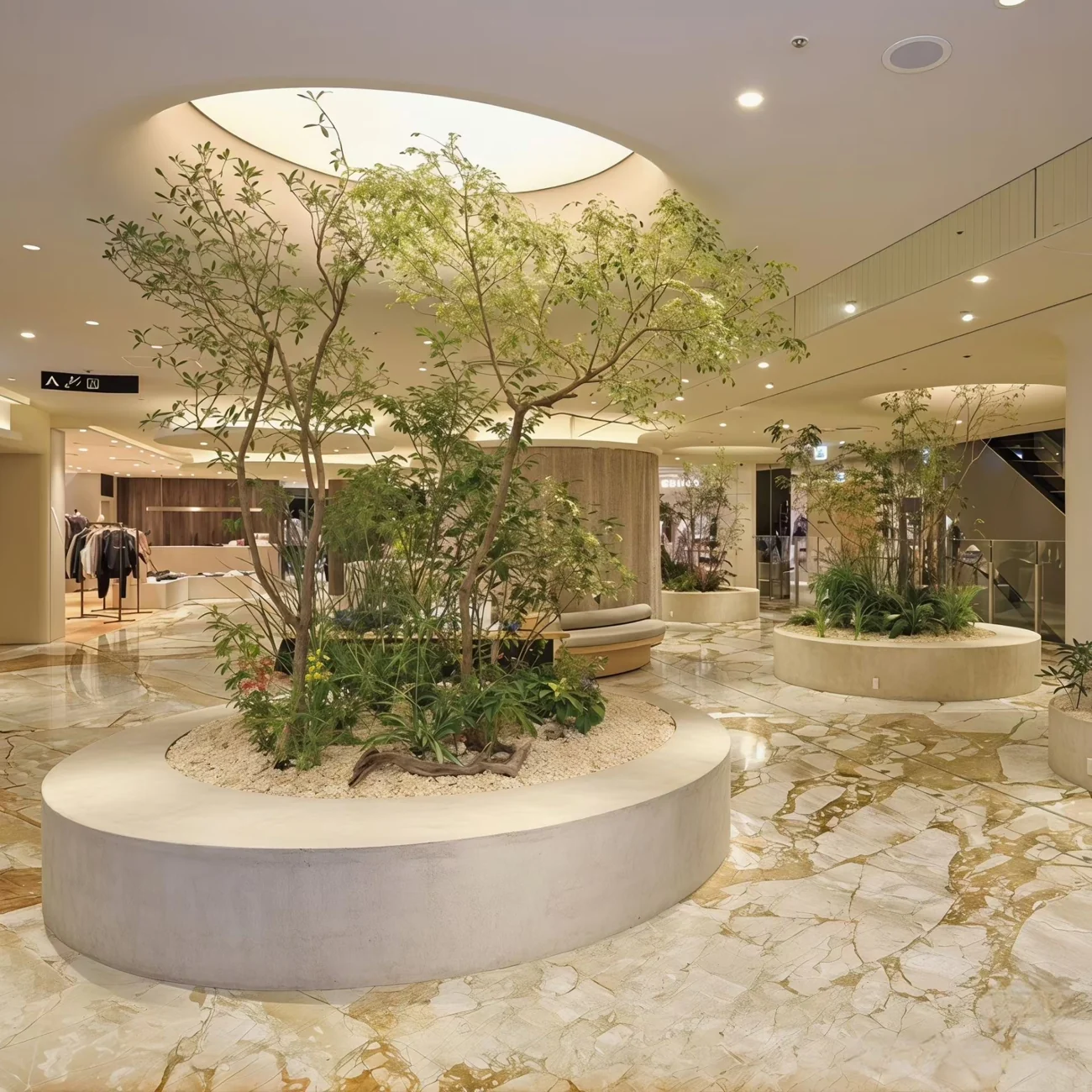
A garden within the interior
Marble surfaces around a planted seating area.
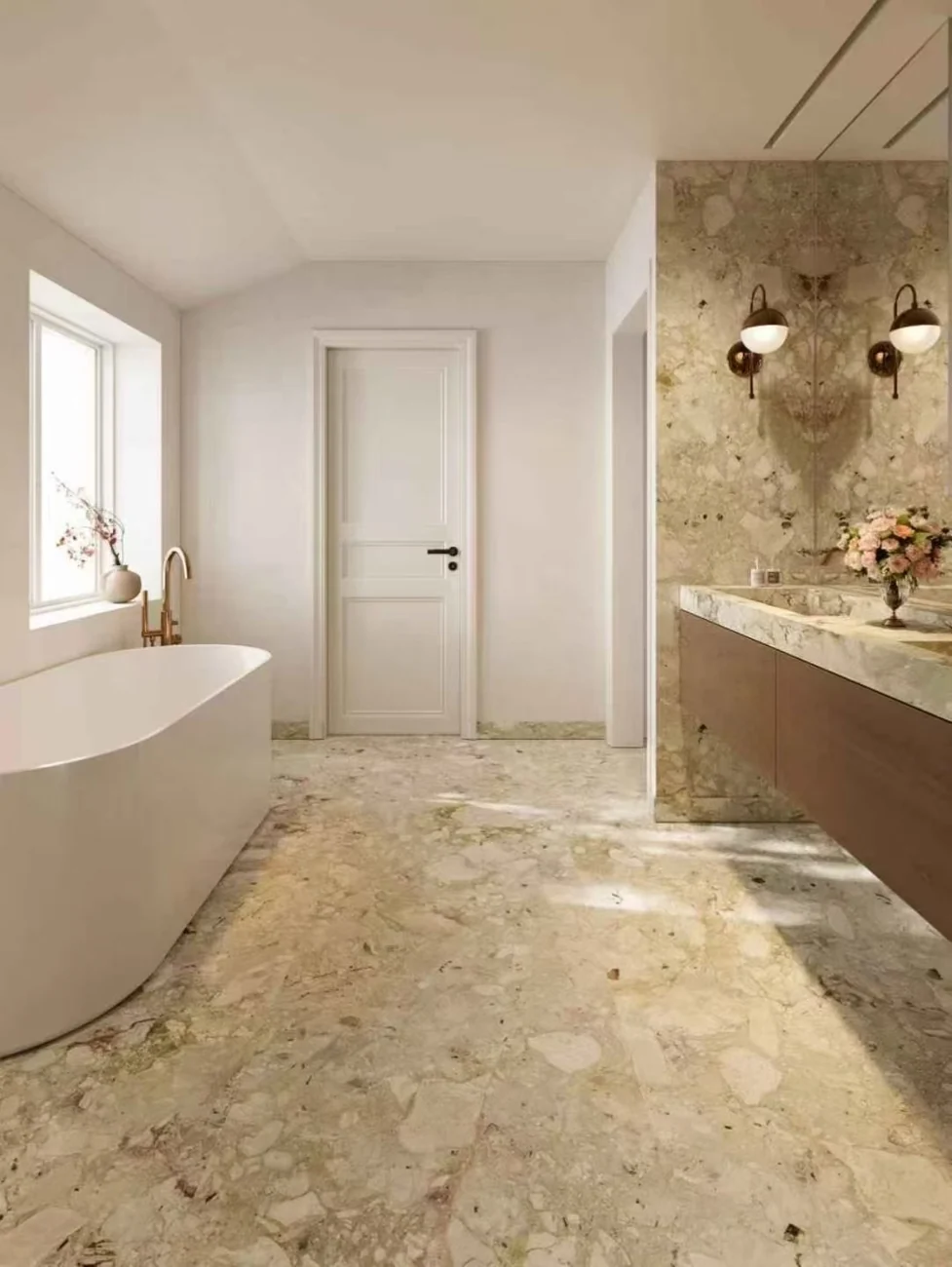
A continuous bathroom palette
Stone flooring and wall surfaces in a light bathroom.
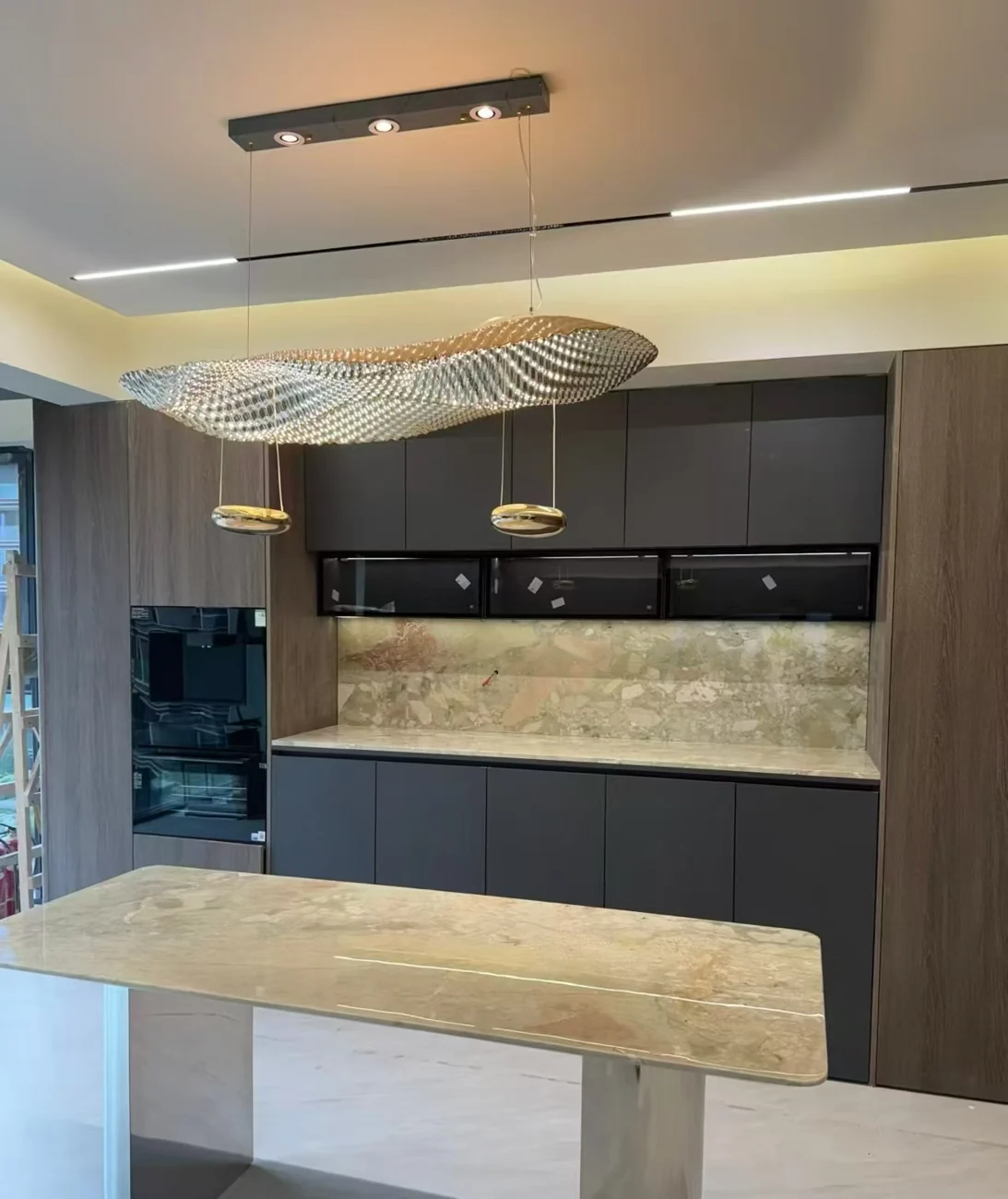
Warmth in the kitchen
A stone island paired with dark cabinetry.
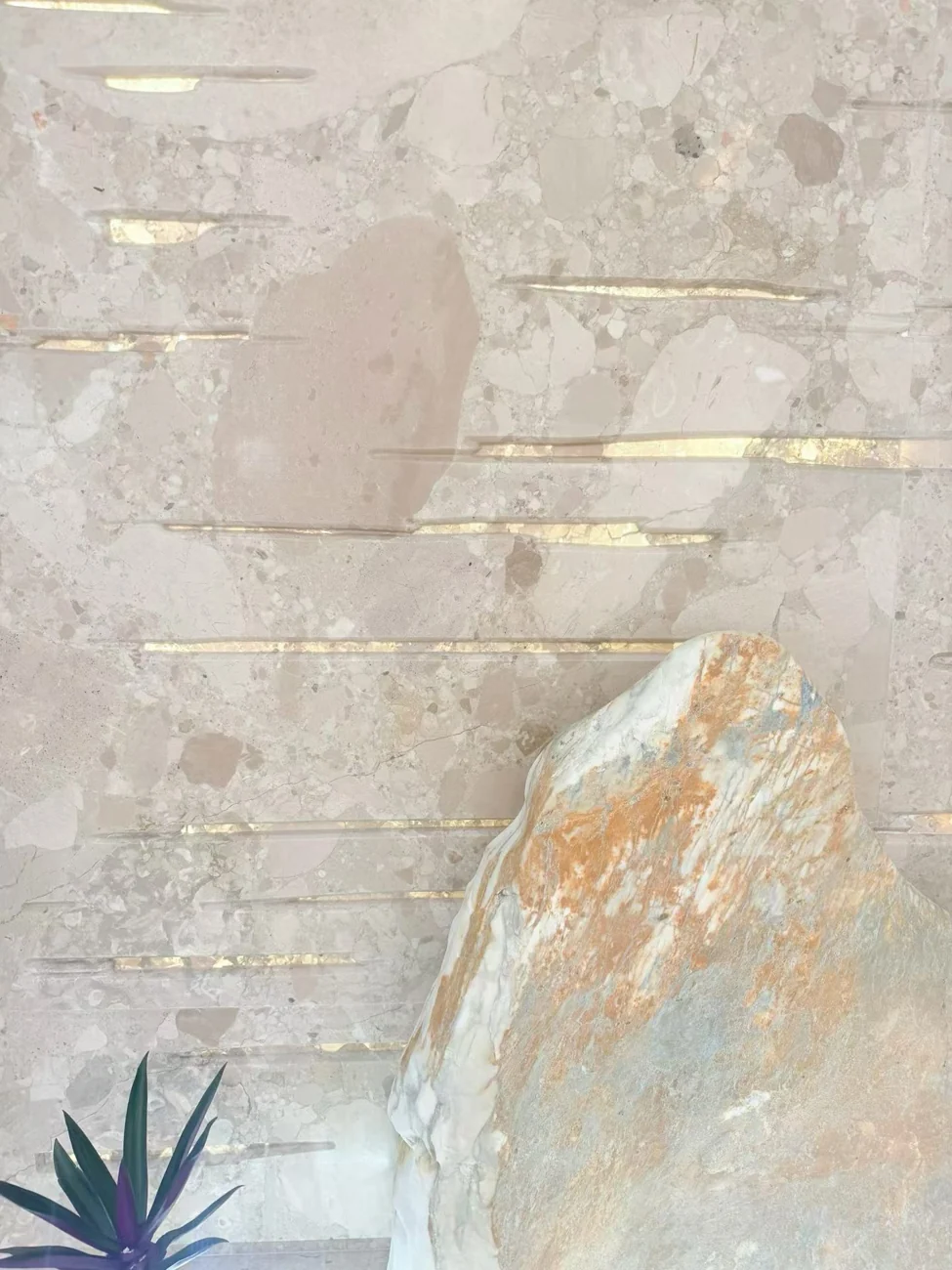
Detail across the wall
A close view of veining and natural colour in vertical cladding.
Your project, your palette.
Explore the slab selection
and find the palette for your project.
For projects requiring several slabs, background tone, colour distribution and the relationship between adjoining pieces deserve careful consideration. Reviewing slab photographs and approving the layout helps create a harmonious result while preserving the stone’s natural variation.
Discuss your project ↗From Monet’s garden in Giverny to the natural stone of northern Italy, a shared harmony of colour connects the two: gentle transitions, unexpected contrasts and beauty found in nature.
For slab selection or custom work, include your quantities, dimensions and preferred colour range.